Yes — if you play competitive FPS titles and want consistent glide that doesn't degrade over time. Glass mousepads outperform cloth on speed, durability, and hygiene. They're not ideal if you rely on high-friction stopping power or want zero maintenance on mouse skates. Below, we break down exactly who should buy one, who shouldn't, and how to choose the right glass mousepad for your setup.
What Is a Glass Mousepad?
A glass mousepad is a gaming surface made from chemically strengthened or tempered glass with an engineered micro-texture on top. Unlike cloth, which compresses and frays with use, a well-made glass surface stays dimensionally stable — what you feel on day one is close to what you feel a year later.
What well-built glass mousepads include
- Tempered or chemically strengthened glass (impact and scratch resistant)
- A precision-textured top coating tuned for optical sensor tracking
- An anti-slip silicone or rubber base to prevent shifting mid-game
- Rounded, polished edges for wrist comfort
- Broad compatibility with modern gaming sensors (PixArt, Focus Pro, etc.)
The result: a low-friction, high-consistency tracking surface that's become the standard among competitive FPS players.
Why Glass Mousepads Are Gaining Ground
Search interest in "glasspad india" and glass surfaces has climbed steadily as more competitive players in Valorant, CS2, and Apex Legends look for gear that won't slow down mid-season. The core reason: cloth pads change texture as they absorb sweat, oils, and dust — glass doesn't.
Players in these titles tend to gravitate toward glass because of the consistency factor:
- Valorant — precise flicks reward predictable glide
- Counter-Strike 2 — spray control depends on uniform friction across the whole pad
- Apex Legends — fast target switching benefits from low resistance
- Overwatch 2 — hero-switching playstyles need a surface that performs the same in hour one and hour 100
- Rainbow Six Siege — micro-adjustments during peeks demand tracking consistency
During monsoon season, cloth pads in high-humidity Indian climates can absorb moisture and shift in feel within weeks. Glass is entirely moisture-resistant — your pad performs the same in Mumbai's July humidity as it does in Delhi's dry winter.
Pros of a Glass Mousepad
1. Faster, Smoother Glide
Glass has meaningfully less surface friction than cloth. That translates to:
- Faster flick shots
- Easier target reacquisition
- Less wrist and forearm fatigue over long sessions
- Smoother low-DPI tracking
2. Performance That Doesn't Degrade
Cloth pads absorb sweat, skin oils, and dust — all of which gradually change how the surface feels. Glass doesn't absorb moisture, so the pad you bought is close to the pad you'll be using a year from now.
3. Genuine Long-Term Durability
A properly made glass mousepad resists the failure points that eventually retire cloth pads:
- No fraying edges
- No soft, worn-down spots
- No warping from humidity — a real factor in Indian climates during monsoon season
4. Cleans in Under a Minute
No washing, no air-drying overnight. A microfiber cloth and a bit of water (or glass cleaner, if the coating allows it) restores a like-new surface instantly.
5. A Premium Setup Upgrade
Glass pads read as premium on camera and in person — frosted finishes, custom artwork, and a minimal aesthetic that fits modern desk setups.
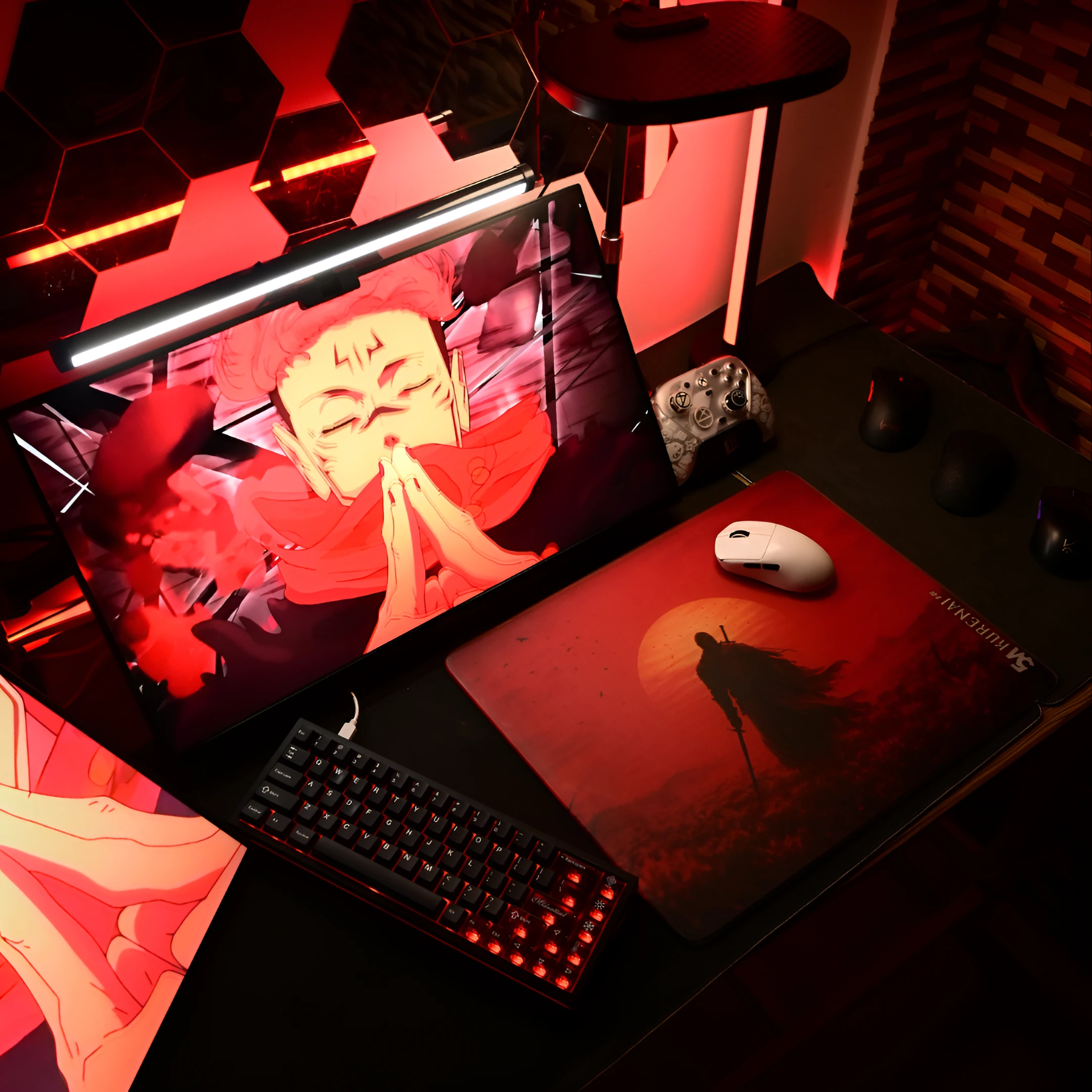
Speed and control in perfect balance. A micro-etched aluminosilicate glass surface engineered for competitive gaming.
Cons of a Glass Mousepad
(And What
Actually Offsets Them)
No surface is perfect for every player. Here's an honest look at the trade-offs:
Tempered glass, surface coating, and quality control all add cost versus a basic cloth pad. It's an upfront investment that pays off in lifespan rather than a per-month cost.
This is true of cheap, poorly-finished glass surfaces with rough or inconsistent texturing. It's less of an issue on pads with a properly engineered, evenly-finished coating designed specifically to reduce skate abrasion — which is why coating quality matters more than "glass vs. cloth" as a category.
If you've used cloth for years, glass can feel fast initially. Most players adapt within a few days to two weeks.
Generic glass pads are often criticized for feeling "too fast" with little control. This isn't inherent to glass — it's a texture-engineering problem. Pads with a deliberately calibrated surface pattern can deliver control much closer to cloth while keeping glass's speed and consistency advantages.
The "glass feels too fast" and "skates wear out" criticisms usually trace back to poorly engineered budget pads. 5MAN GLASSPADs use a precision-calibrated surface texture that delivers stopping power comparable to cloth while maintaining the speed and consistency advantages of glass.
Glass vs. Cloth Mousepad:
Quick Comparison
A side-by-side breakdown of the categories that matter most for gamers.
Who Should Buy a Glass Mousepad?
You're a strong fit if you:
Who Should Stick With Cloth?
Cloth may suit you better if you:
Does a Glass Mousepad Improve Your Aim?
Not directly — no mousepad substitutes for practice. What a good glass surface provides is a more predictable, consistent input layer: your hand movements translate to cursor movement the same way every time, which removes one variable from your aim training.
Think of it as similar to upgrading from a budget keyboard to a mechanical one — it improves the experience and removes friction, but the skill still comes from you.
Consistency, not speed, is the actual performance gain. When your surface performs identically every session, your muscle memory builds faster because there's one fewer variable changing underneath you.
Is a Glass Mousepad Good for Everyday Work Too?
Yes. Beyond gaming, glass mousepads hold up well for office work, graphic design, video editing, and general use — the smooth surface and low-maintenance cleaning make them practical for all-day desk use, not just gaming sessions.
Designers and editors in particular benefit from the tracking consistency — no dead zones, no texture variation, no performance shift after lunch when your hands are warmer.
How Long Does a Glass Mousepad Actually Last?
With reasonable care, a well-made tempered glass mousepad can last several years — well beyond the typical 6-12 month lifespan of a budget cloth pad. To get the most out of one:
- Wipe it down regularly with a microfiber cloth
- Use quality PTFE mouse skates and replace them when worn
- Avoid dropping heavy or sharp objects on the surface
- Store or transport it flat, avoiding excess pressure on the edges
A quality glass mousepad at Rs 1,999 lasting 3+ years costs roughly Rs 55/month. A Rs 499 cloth pad replaced every 8 months costs about Rs 62/month — and degrades throughout its life. Glass is the better long-term value.
Frequently Asked Questions
The Final Verdict
A glass mousepad isn't the right upgrade for every player, but for competitive gamers who want consistent glide, real durability, and a low-maintenance surface, it's one of the more worthwhile peripheral upgrades available.
The "glass feels too fast" and "skates wear out" criticisms usually trace back to poorly engineered budget pads — not to glass as a category.
Before buying, think about your play style: if you lean fast and flick-heavy, glass rewards you immediately. If you rely on heavy drag-to-stop control, look for a glass pad with a texture specifically engineered for higher control, or consider staying with cloth.
Looking for a Premium Glass Mousepad Built for Consistency?
Explore the 5MAN GLASSPAD collection — engineered with a stopping-power-tuned surface texture, near-silent glide, and custom sizing options, built specifically for players who want glass's speed without sacrificing control.

Grace in design. Power in performance. A premium gaming glasspad optimized for the perfect balance of speed and control.