Why Your Mousepad Matters More Than You Think
You agonize over GPU specs, monitor refresh rates, and mechanical switch actuation — but the mousepad? An afterthought shoved under your mouse. Yet the surface your mouse glides on directly affects sensor tracking accuracy, muscle memory consistency, and in fast-paced games, your actual kill count.
The debate around glass mousepad vs cloth has intensified in recent years as glass pads have moved from novelty to a genuine choice for serious gamers. This guide cuts through the marketing noise and gives you a real comparison based on what matters at your desk.
Most glass pads trade stopping power for speed — but 5manglasspad is engineered differently, with built-in stopping power, near-silent skates, and custom size options. If you want the hygiene and consistency of glass without the usual compromises, that changes the equation. For pure comfort during marathon sessions or a very tight budget, cloth still holds its ground.
What Is a Glass Mousepad?
A glass mousepad is exactly what it sounds like — a tempered or borosilicate glass surface treated with micro-etching to create a uniform, ultra-smooth texture for mouse tracking. Unlike raw glass (which is too slippery for sensors), gaming glass pads use precision surface finishing to give optical and laser sensors a consistent, readable texture.
How glass mousepads work
The etched micro-texture creates millions of tiny peaks and valleys that optical sensors can track across. This texture is perfectly uniform — unlike cloth, which has threads and weave patterns that can cause slightly inconsistent tracking depending on where your mouse is on the pad.
Modern glass pads also include rubber or silicone feet on the underside to prevent sliding, and the glass itself is typically 4–6mm thick tempered safety glass — so no, it won't shatter if you rage-quit and slam your desk.
Glass mousepads have virtually zero "break-in" period. Cloth pads often take 20–30 hours of use before they reach their optimal glide characteristics. Glass is consistent from the first swipe.
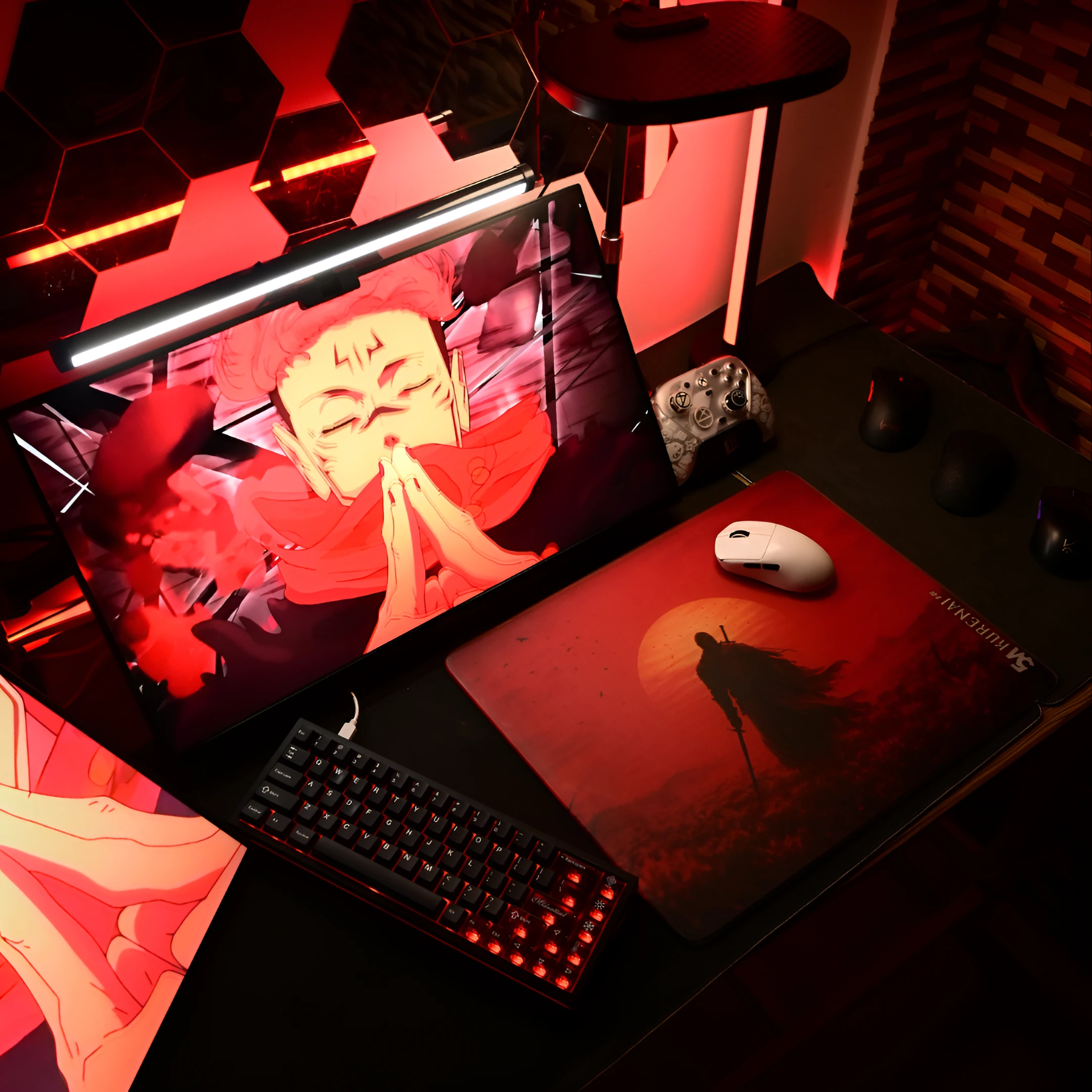
A balanced glass gaming mousepad with micro-etched aluminosilicate glass. Engineered for speed without losing the stopping power needed for precision.
What Is a Cloth Mousepad?
The cloth mousepad is the reigning champion of gaming surfaces — and has been for decades. It consists of a woven textile surface (usually polyester or a poly-blend) bonded to a rubber non-slip base. Within cloth pads, there's an enormous spectrum from ultra-fast (tight weaves) to slow and controlled (looser, textured weaves).
The spectrum within cloth pads
Not all cloth pads are equal. Speed pads like the Artisan Zero or Logitech G640 use tighter, more compressed weaves to reduce friction — approaching glass-like glide. Control pads like the Steelpad QcK Heavy or HyperX Fury S use looser weaves that provide more stopping power and allow precise cursor placement.
This variability is both cloth's greatest strength and its most confusing trait when shopping for the best mousepad for gaming.
Head-to-Head:
Glass vs Cloth
Let's put both surfaces through the categories that matter to gamers — no fluff, just the key differences.
Is a Glass Mousepad Good for FPS?
This is the question every FPS gamer asks — and the answer is genuinely nuanced. Is glass mousepad good for fps gaming? It depends heavily on your playstyle.
High-sensitivity FPS players
If you play on high DPI / high sensitivity (small, wrist-only movements), most glass pads can work against you — stopping precisely requires resistance that generic glass surfaces lack. However, 5manglasspad is specifically engineered with stopping power built into the surface, meaning high-sens players don't have to compromise on control the way they would with other glass pads.
Low-sensitivity FPS players
Low-DPI players (400–800 DPI, arm-aiming) tend to make sweeping, full-arm motions and rely less on friction for stopping. For these players, glass's speed advantage can actually help with faster flicks and 180-degree turns. The uniform tracking surface also eliminates the micro-inconsistencies that occur on worn cloth pads.
What pro FPS players actually use
Here's the reality: the overwhelming majority of professional CS2, Valorant, and APEX players use cloth pads. The Artisan Zero, Logitech G640, and Steelpad QcK Heavy dominate pro setups. Cloth's controllability during precise micro-adjustments remains the gold standard for aiming.
A common complaint about glass pads is the audible clicking sound when PTFE feet cross the surface at speed. 5manglasspad's engineered skate system addresses this directly — delivering a near-silent glide that holds up even during intense, fast-paced gaming sessions.
That said, glass pads have found fans in MOBA and RTS gaming where speed of cursor movement matters more than sub-millimeter FPS precision. Games like Dota 2, StarCraft II, and League of Legends don't require the same stopping-power precision as a headshot-based FPS — and glass's speed shines here.
Pros & Cons Breakdown
Glass Mousepad
- Ultra-fast, consistent glide
- Never degrades in performance
- Wipe clean with a damp cloth
- Stays cool — no sweaty surface buildup
- Uniform optical sensor tracking
- Great for MOBA/RTS genres
- Engineered stopping power (5manglasspad)
- Near-silent skates (5manglasspad)
- Custom sizes available (5manglasspad)
- Hard, cold surface — wrist fatigue over time
- Heavy and less portable than cloth
- Other glass pads lack stopping power & size options
Cloth Mousepad
- Excellent stopping power and control
- Soft, comfortable for long sessions
- Wide size range including desk mats
- Silent surface — zero noise
- Proven choice for competitive FPS
- Budget to premium options available
- Absorbs sweat and oils over time
- Performance degrades after months of use
- Requires occasional washing
- Weave inconsistencies (minor)
- Can bunch or roll at edges
- Slower break-in period
Who Should Pick Which Mousepad?
Here's the practical verdict broken down by gamer type. The short version: glasspad wins across virtually every gaming profile — the only exception is the tightest budget scenarios where entry-level cloth is the only viable option.
Frequently Asked Questions
The Final Verdict
Both glass and cloth mousepads are legitimate performance choices in 2025 — neither is objectively "better." The question is which one matches your gaming style and priorities.
Choose cloth if: you need maximum wrist comfort for marathon sessions, prefer a super soft surface feel, or are on a tight budget. Cloth's softness and wide availability at every price point make it the safe default for most casual gamers.
Choose 5manglasspad if: you want the speed and hygiene of glass without the usual trade-offs. Unlike generic glass pads, 5manglasspad is built with engineered stopping power for precise control, near-silent skates for distraction-free play, and custom size options so your surface fits your exact desk setup — not the other way around.

Grace in design. Power in performance. A premium gaming glasspad optimized for the perfect balance of speed and control.
If you've always been curious about glass but held back because of noise, lack of control, or limited sizes — 5manglasspad was built specifically to answer those objections. It's glass, done right.